
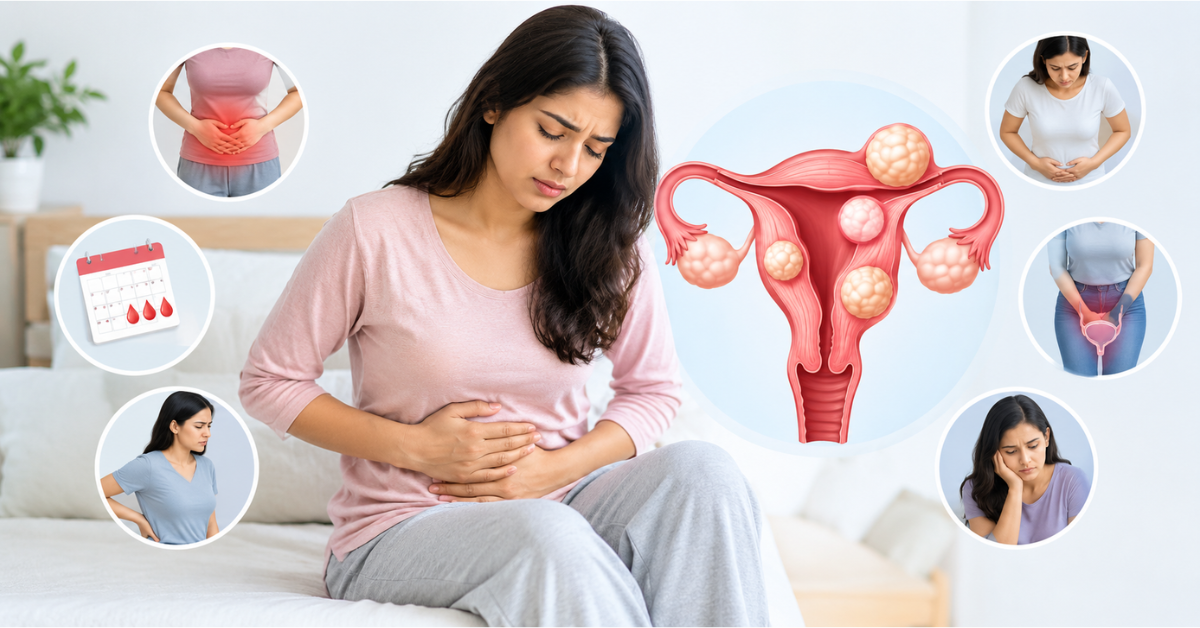
Uterine fibroids are common, non-cancerous growths that develop in or around the uterus. Some women have fibroids without noticing any symptoms, while others may experience menstrual problems, pelvic discomfort, or changes in urination. Symptoms can vary based on the size, number, and location of the fibroids.
What Are Uterine Fibroids?
Fibroids are growths made of muscle and connective tissue that develop in the uterus. They can be very small or grow larger over time. Fibroids may develop within the uterine wall, under its outer surface, or beneath the inner lining. Their effects can differ from one person to another.
Common Symptoms Of Uterine Fibroids
Heavy Or Prolonged Periods
One of the most common signs is unusually heavy menstrual bleeding. Periods may also last longer than usual. Heavy bleeding can sometimes contribute to iron-deficiency anemia, which may cause tiredness or weakness.
Pelvic Pain Or Pressure
Larger fibroids may cause a feeling of heaviness, pressure, or pain in the lower abdomen or pelvis. Some women may also experience lower back pain.
Frequent Urination
A fibroid located near the bladder may put pressure on it, leading to frequent urination or an increased need to pass urine.
Pain During Sex
Some women with fibroids may experience discomfort or pain during sexual intercourse, depending on the size and location of the growth.
Abdominal Fullness Or Enlargement
Larger fibroids can sometimes make the abdomen feel full or appear slightly enlarged. This may be mistaken for weight gain or bloating.
Fertility Or Pregnancy Concerns
Some fibroids can affect fertility or pregnancy, particularly when they change the shape of the uterine cavity. However, many women with fibroids become pregnant without major problems.
When Should You See A Doctor?
Talk to a gynecologist if you have very heavy periods, ongoing pelvic pain, bleeding between periods, or symptoms that interfere with daily activities. Seek prompt medical attention if bleeding is very heavy or you feel faint, unusually weak, or short of breath.
How Are Uterine Fibroids Diagnosed?
A doctor may review your symptoms and medical history and perform a pelvic examination. An ultrasound is commonly used to identify fibroids and assess their size and location. Additional tests may be recommended when needed.
Treatment Or Management Overview
Treatment depends on symptoms, fibroid size and location, age, overall health, and pregnancy plans. Some fibroids do not require immediate treatment and may simply be monitored. When treatment is needed, options can include medicines, minimally invasive procedures, or surgery.
If you notice persistent menstrual or pelvic symptoms, a timely evaluation at a Gynecology Hospital in Indore can help identify the cause and guide appropriate care.
FAQs
1. Can uterine fibroids cause heavy periods?
Yes. Fibroids can cause heavier or longer menstrual bleeding, especially when they affect the inner part of the uterus.
2. Can fibroids cause pelvic pain?
Yes. Some fibroids can cause pelvic pain, pressure, cramps, or lower back discomfort.
3. Can uterine fibroids cause frequent urination?
Yes. A larger fibroid may press against the bladder and increase the need to urinate.
4. Can fibroids affect fertility?
Some fibroids may affect fertility, depending on their size and location. However, many women with fibroids can become pregnant.
5. Do all fibroids need treatment?
No. Fibroids that cause no symptoms may only need regular monitoring. Treatment is considered when symptoms or other concerns require it.