
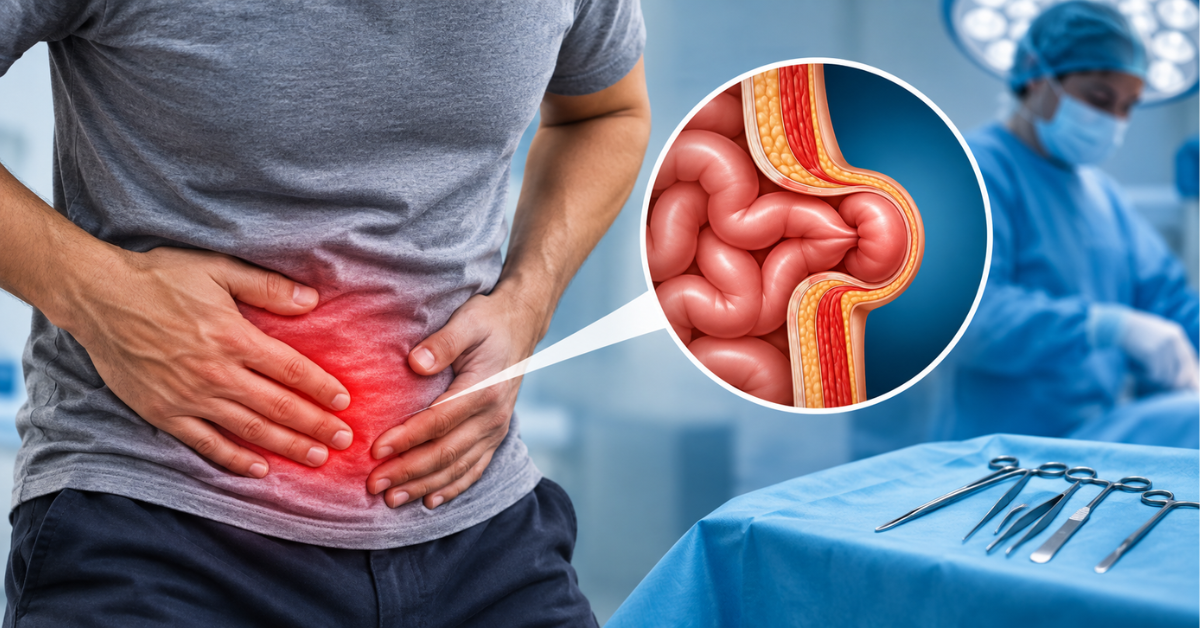
A hernia is when an internal organ or tissue pushes through a weakness in the muscle surrounding it. Initially it may appear as a small bulge and may cause little discomfort. However, being able to notice the symptoms of hernia early can help you get medical attention on time and lower the chances of complications.
What Is A Hernia?
A hernia is a protrusion of tissue through a weak spot in the abdominal wall. The common types are Inguinal hernia ( in the groin ) , Umbilical or Incisional hernias . Some hernias stay small, but others tend to grow larger and more uncomfortable.
Hernia Symptoms Common Symptoms
Symptoms may vary depending on the type and location of the hernia. Look for things like:
A bulge in the abdomen or groin which can be seen or felt, particularly when standing or straining.
Pain, ache or discomfort around the lump
A sensation of heaviness, pressure or pulling in the affected area
Pain that increases with coughing, lifting, bending or straining
Symptoms that are more obvious with physical activity
A bulge may become less visible when lying down, but that doesn’t mean that the hernia has healed.
What Are The Indications For Hernia Surgery?
Surgery for a hernia may be recommended if it causes ongoing pain or discomfort, keeps getting bigger, or interferes with work, exercise or daily activities. If there is concern about complications, surgery may be recommended. A surgeon will take into account the hernia, your symptoms, your overall health and risk of future problems before recommending hernia repair.
Signs That Require Immediate Medical Attention
There are some symptoms that can indicate that the hernia has become trapped or that its blood supply is affected. If you have: Get checked out right away
Severe or sudden pain in your abdomen or groin.
A lump that feels hard, very tender or does not move when pushed back
Redness or marked swelling about the hernia
Nausea, vomiting
Trouble passing stool or gas
These signs may be a sign of serious hernia complication and should not be ignored.
What Happens If You Don’t Treat A hernia?
A symptomatic hernia if not evaluated, can increase in size or become more painful over time. In some cases tissue may get trapped in the hernia, which may need urgent treatment. A routine medical evaluation helps to determine if the patient requires continued observation or surgical repair.
When hernia symptoms don’t improve, get worse, or start to interfere with your daily life, consulting with an experienced surgical team can help you explore your treatment options. A trusted general surgery hospital in Indore can provide you with the right evaluation, surgical expertise and post-surgical care depending on your individual condition.
FAQs
1. What are the early signs of a hernia?
Early signs can be a small visible bulge, mild pain, pressure, heaviness or discomfort in the abdomen or groin, especially when coughing, lifting or straining.
2. Will a Hernia Heal on Its Own?
Most adult hernias do not heal on their own because the weakened spot in the muscle persists. A doctor can help determine if monitoring or repair is best.
3. When is surgery needed for a hernia?
Surgery may be recommended if pain persists, the size grows, activity causes discomfort, or there is a high risk of complications.
4. What are the signs of a complicated hernia?
Important warning signs are severe pain, hard or non-reducible bulge, redness, vomiting and difficulty passing stool or gas.
5. How do you diagnose a hernia?
A hernia is often diagnosed by a physical examination. The doctor might advise for imaging tests such as ultrasound or CT scan, depending on the location and symptoms.