
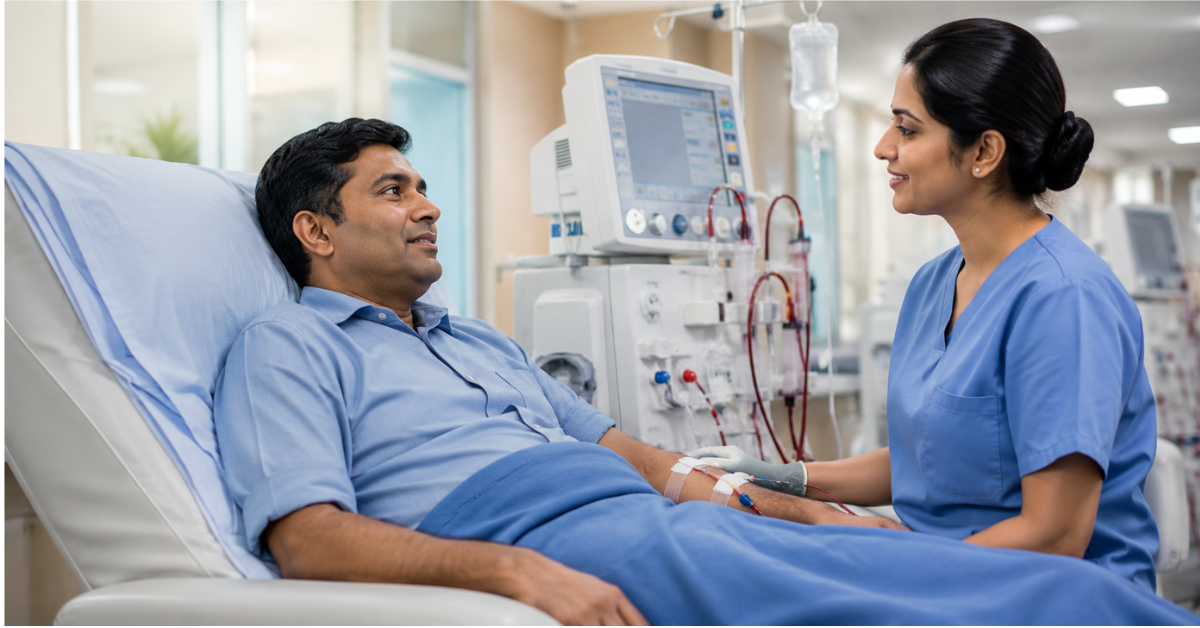
Starting dialysis for the first time can feel unfamiliar, but knowing what to expect can make the experience easier. Dialysis treatment helps remove waste, extra fluid, and certain harmful substances from the blood when the kidneys cannot do this well enough.
Before Your First Dialysis Session
Before treatment begins, the healthcare team will review your medical history, medicines, and kidney function. Your weight, blood pressure, temperature, and other vital signs may be checked to help plan your treatment.
For hemodialysis, the team will examine your vascular access, which is the area used to connect your bloodstream to the dialysis machine. Depending on your treatment plan, this may be a fistula, graft, or catheter. Tell the team if you notice pain, swelling, redness, or other changes around the access site.
What Happens During Dialysis?
During hemodialysis, blood is gently removed from the body through the vascular access and passed through a special filter called a dialyzer. The filtered blood is then returned to your body. The dialysis machine controls the process while the healthcare team monitors you.
Your blood pressure and overall comfort may be checked during the session. You can usually sit or lie comfortably, read, listen to music, or talk with the care team. If you feel uncomfortable, let the staff know promptly.
How Long Does Dialysis Take?
The length of a dialysis session can vary based on your treatment plan, kidney function, fluid levels, and overall health. Your nephrologist will decide the appropriate schedule and duration for you. Do not compare your treatment time with another patient’s, as dialysis needs are individual.
How Might You Feel Afterwards?
Some people feel tired or mildly weak after dialysis, while others feel relatively normal. Mild discomfort at the access site or temporary dizziness can occur in some patients, particularly if fluid is removed. Tell your care team about symptoms such as severe dizziness, chest pain, breathing difficulty, or unusual discomfort.
Tips For Your First Session
Wear comfortable clothing, follow your healthcare team’s instructions about food, fluids, and medicines, and bring something to help you relax during treatment. Avoid making changes to your dialysis schedule or prescribed medicines without medical advice. Keep your vascular access clean and protected, and follow the care instructions given by your healthcare team.
If you are preparing for dialysis, choosing a team that provides specialist nephrology care, careful monitoring, and individualized treatment can help you feel more confident. A trusted nephrology hospital in indore can guide you and your family through dialysis care while addressing questions about treatment and recovery.
FAQs
1. Is the first dialysis session painful?
Dialysis is generally not painful, although you may feel brief discomfort from needle placement if a fistula or graft is used. Tell the healthcare team if you experience significant pain.
2. Can I eat or drink during dialysis?
Depending on your treatment plan, you may be able to eat or drink small amounts during dialysis. Follow the fluid and diet instructions provided by your healthcare team.
3. Can I use my phone during dialysis?
In many dialysis centers, patients can use their phones or read during treatment. Follow the facility’s rules and keep yourself comfortable.
4. What should I do if I feel dizzy during dialysis?
Tell the dialysis staff immediately if you feel dizzy, weak, nauseous, or unwell. They can check your blood pressure and assess whether any changes are needed.
5. Can I return to normal activities after dialysis?
Many people resume their usual activities, but some may need time to rest because of tiredness. Your healthcare team can advise you based on your individual condition and response to treatment.