
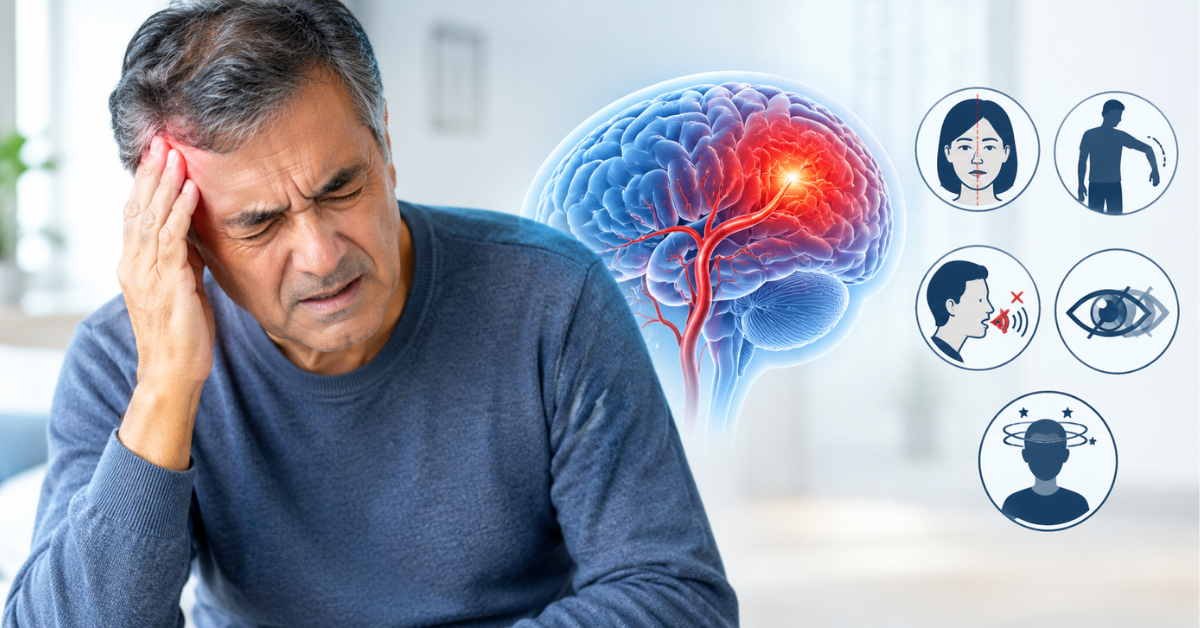
A stroke occurs when blood flow to a part of the brain is blocked or when a blood vessel in the brain bursts. Brain cells can be damaged in minutes if there isn’t enough oxygen. Getting medical treatment early can help lessen the chances of serious brain injury and long-term disability.
Strokes can occur in people of all ages, but the risk increases with age. Risk factors include high blood pressure, diabetes, high cholesterol, smoking, obesity and some heart conditions.
Symptoms Of A Stroke
Stroke symptoms usually come on suddenly. Remembering the FAST warning signs helps you act fast:
Face: One side of a person’s face may droop when they smile.
Arms: One arm may be weak or numb, and you may have trouble lifting both arms.
Speech: The speech can be garbled, muddled or difficult to understand.
Time: If you have any of these signs, call emergency medical services immediately.
Other symptoms can include sudden vision problems, severe dizziness, difficulty walking, loss of balance, numbness, or a sudden severe headache with no known cause.
Why You Should Seek Immediate Medical Attention
Stroke is a medical emergency. Some treatments work best if they’re given soon after symptoms begin. Waiting to see if symptoms improve can delay diagnosis and treatment.
Even if symptoms resolve after a few minutes, it is important to get medical evaluation. This may occur in a transient ischemic attack (TIA), also known as a mini-stroke, which may serve as a warning for a future stroke.
If You Have Stroke Symptoms, What To Do
If you think you or someone else may be having a stroke, get emergency medical help immediately. Write down when you first noticed symptoms, as this will help doctors decide on what treatment options might be suitable for you.
Do not give food, drink or medication unless advised to do so by a medical professional. Remain with the person and keep them safe until emergency help arrives.
When To Go To The Emergency Room
Don’t wait until all symptoms are present. Even one sudden warning sign of stroke needs urgent assessment. Emergency medical services should be called immediately for people in Indore who experience sudden weakness, difficulty speaking, facial drooping, vision changes, or problems with balance. Evaluating at the earliest, at a neurology hospital in Indore, can help you find out the cause and get on the right treatment at the earliest.
FAQs
1. Can you have a stroke without warning signs?
Yes. Some people will have warning episodes such as a TIA before a major stroke but stroke symptoms can come on suddenly.
2. What are the first signs of a stroke?
A sudden change in facial movement, strength in the arms, speech, vision, or balance or coordination can be an early warning sign.
3. Are stroke symptoms self-limiting?
They may improve or sometimes disappear, particularly in a TIA. But this still needs urgent medical assessment.
4. How long should I wait to seek help for a suspected stroke?
No. Waiting can mean a delay in treatment. If you see signs of stroke, get emergency medical care right away.
5. Can we prevent strokes?
Some strokes can be prevented by controlling your high blood pressure, diabetes, and cholesterol, not smoking, being physically active, and obeying your doctor.