
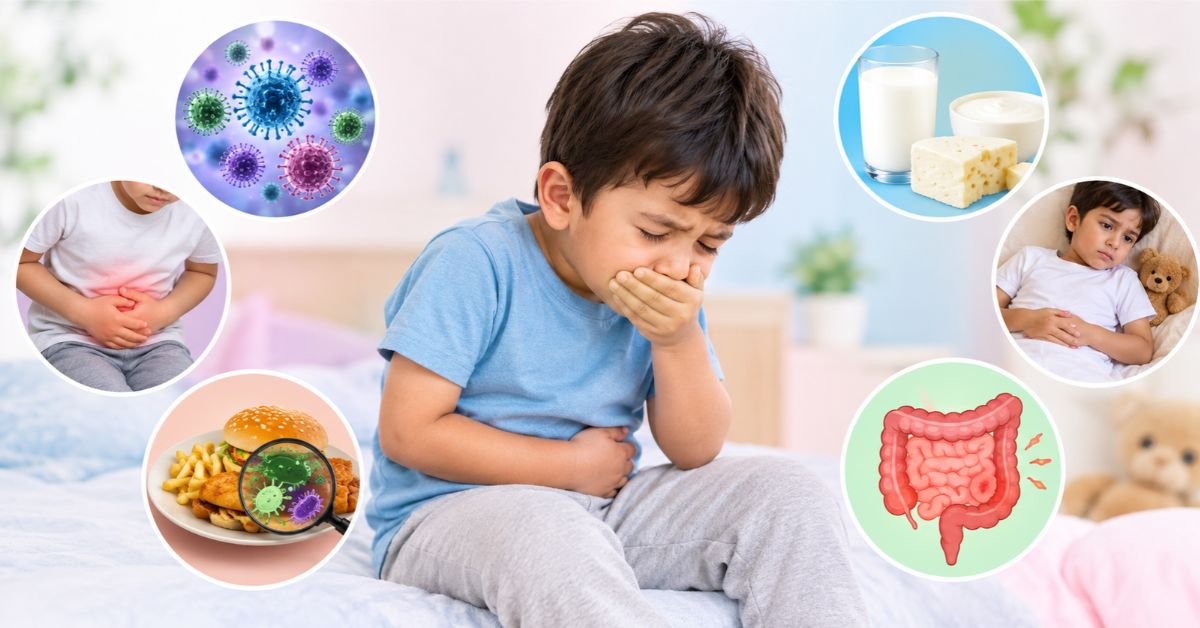
omiting and diarrhea are common health problems in children and can occur due to infections, food-related issues or digestive disturbances. Although these symptoms often improve with proper care, parents should pay attention to their frequency, duration and severity. Repeated vomiting and loose stools can cause dehydration, which may require prompt medical attention.
Common Causes of Vomiting and Diarrhea in Children
Several factors can contribute to vomiting and diarrhea in children.
1. Viral Infections
Viral gastroenteritis is one of the common causes of vomiting and diarrhea. It may also be associated with stomach pain, fever and reduced appetite.
2. Bacterial Infections
Consuming contaminated food or water can introduce harmful bacteria into the digestive system. This may lead to loose stools, vomiting, abdominal cramps and fever.
3. Food Intolerance
Some children may experience digestive symptoms after consuming certain foods, such as milk or dairy products, particularly if they have lactose intolerance.
4. Food Poisoning
Eating contaminated or improperly stored food can cause sudden vomiting, diarrhea and stomach discomfort.
5. Digestive Problems
Indigestion and other digestive disturbances may sometimes cause vomiting, abdominal discomfort and changes in bowel movements.
Warning Signs Parents Should Not Ignore
Vomiting and diarrhea can lead to dehydration, especially in infants and young children. Watch for these warning signs:
- Dry mouth and tongue
- Reduced urination or fewer wet diapers
- Unusual tiredness or weakness
- Sunken eyes
- Excessive thirst
- Inability to keep fluids down
If a child becomes unusually sleepy, has blood in the stool or vomit, severe abdominal pain or signs of significant dehydration, seek immediate medical attention.
How to Manage Vomiting and Diarrhea in Children
Proper hydration is important when children experience vomiting and diarrhea. Oral Rehydration Solution (ORS) can help replace lost fluids and electrolytes. Continue breastfeeding infants and offer age-appropriate food as tolerated.
Avoid giving medicines for vomiting or diarrhea without consulting a pediatrician. If symptoms persist, worsen or the child is unable to drink fluids, medical evaluation is necessary.
When Should You Visit a Pediatric Hospital?
Parents should consult a pediatrician if vomiting and diarrhea occur repeatedly, symptoms do not improve or the child shows signs of dehydration. Infants, especially newborns, may need prompt medical assessment.
Choosing an appropriate Pediatric Hospital in Indore can help parents access timely consultation and medical care for childhood illnesses. City Nursing Home provides healthcare services for children, supporting their health and well-being through appropriate medical guidance.
Vomiting and diarrhea in children can occur due to infections, contaminated food, food intolerance and digestive problems. Recognizing the early symptoms and maintaining proper hydration can help prevent complications. Timely consultation with a pediatrician is important for ensuring appropriate treatment and supporting a child’s recovery.